
In the modern digital landscape, verifying online accounts often requires a mobile phone number. As privacy concerns grow and international restrictions become more common, services like SMS Activate have emerged as a critical utility for developers, marketers, and individual users alike. These platforms provide virtual phone numbers that allow users to receive verification codes via SMS, bypassing the need for personal SIM cards or physical hardware. Understanding how these services function is essential for anyone looking to maintain multiple online presences or operate across international borders without traditional telephony limitations.
Understanding SMS Activate Services
SMS Activate and similar platforms offer a specialized solution for digital identity management. At its core, the service provides temporary or long-term virtual mobile numbers sourced from various countries. These numbers function as endpoints for verification messages, which are then relayed to the user through a web-based dashboard or an automated API. For many users, the value proposition lies in the ability to sign up for global services that might otherwise restrict access based on the user’s geographic location or local telephony infrastructure.
Operating in this space requires a clear understanding of the difference between temporary SMS reception and long-term number leasing. Short-term rentals are typically designed for one-time verification processes, such as confirming a social media account or an email address. Conversely, long-term options provide a persistent number that can be used for ongoing communication or extended access to subscription services. Choosing between these options depends heavily on the specific requirements of the user, whether they are performing a single bulk task or managing a perpetual business workflow.
Market dynamics in this sector are constantly shifting due to changes in telecommunications regulations. Because SMS Activate operates across numerous jurisdictions, it must constantly adapt to local carrier policies, which can affect the availability and success rates of specific virtual numbers. Experienced users monitor these changes to ensure their automated systems remain functional. If you are researching the current market landscape, it is helpful to look at the top sms activate alternatives to understand how different providers balance geographic variety with technical stability.
How Virtual Number Platforms Work
The technical foundation of an SMS activation service relies on a massive network of physical SIM cards or virtual gateways located in various countries. When a user requests a number through a platform interface, the system pulls an available number from its inventory that meets the requested criteria, such as country, mobile carrier, or specific digital service provider. This process is usually automated, allowing for rapid deployment and high-volume operations that would be impossible with traditional cellular hardware.
Once a number is issued, it is technically linked to the user’s account for a set period. When a third-party platform sends an SMS verification code to that number, the system captures the inbound traffic. The message is then parsed and displayed to the user via the dashboard or forwarded through a programmatic callback. This architecture allows for a seamless integration with custom scripts, meaning that developers can build entire automation workflows that verify thousands of accounts simultaneously without manual intervention at the SMS level.
The underlying infrastructure must maintain high levels of uptime to be truly useful for business operations. Reliability is achieved through redundant connections to multiple telecommunications carriers. If a specific range of numbers experiences issues, the platform can typically reroute or switch to a different provider to maintain service continuity. For the end user, this abstraction layer is invisible, as they interact primarily with an API key, a credit balance, and a simplified user experience that hides the complex routing and compliance work occurring in the background.
Key Features and Operational Capabilities
When selecting a platform for SMS activation, users generally look for a set of standardized features that streamline the verification process. The most significant of these is the geographic breadth of numbers. A robust service will provide coverage for hundreds of countries, enabling businesses to create local-looking experiences for their target markets. Having access to a diverse pool of international numbers is often the deciding factor for developers managing large-scale global campaigns.
Automation and scalability are also crucial for modern users. The following features are standard in most professional-grade SMS activation environments:
- API Access: Integration with custom software allows for automated purchase, reception, and status checking of virtual numbers.
- Diverse Service Support: Compatibility with popular social networks, communication applications, and banking-related platforms.
- Flexible Rental Durations: Options ranging from a single SMS reception to multi-day or multi-month leasing.
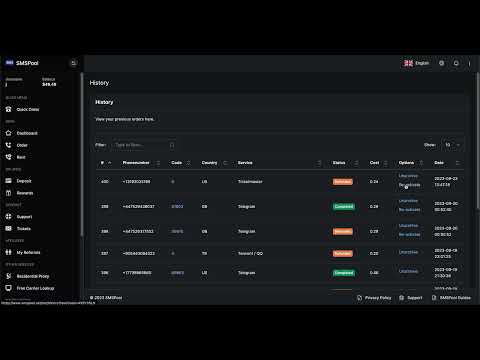
- Detailed Activity Logs: Built-in history tracking for auditing and cost management purposes.
- Account Tiering: Features for high-volume users, such as priority access to new number ranges or dedicated support channels.
Scalability becomes a key point of discussion when teams move beyond manual tasks. Automated workflows often utilize scripts written in Python or Node.js to poll for SMS messages. By minimizing the time between purchasing a number and receiving the verification code, businesses can significantly reduce their operational costs. Effective usage of such systems requires a solid grasp of documentation and a proactive approach to managing API load limits, which prevent service interruptions during peak activity periods.
Use Cases for Business and Development
The practical application of SMS verification services is vast and varied across several industries. Marketing agencies frequently utilize these tools to manage multiple social media profiles for clients, ensuring that they can verify accounts without needing dozens of physical mobile devices. This capability is particularly useful for community management tasks, where maintaining a clean, verified presence across different geographical segments is a basic requirement for performance tracking and audience engagement.
For developers, the integration of these services is common in the testing phase of application development. If an app requires phone-based authentication, developers need a way to reliably test the registration flow from different parts of the world. Utilizing these services allows them to run automated integration tests that simulate real user behavior across various countries. This practice significantly speeds up the development lifecycle and ensures the app behaves correctly for a global user base.
- Account Management: Handling bulk registrations for white-label marketing campaigns or research projects.
- App Testing: Validating user flows for mobile applications that require OTP or SMS-based authentication at sign-up.
- Data Privacy: Providing users with an additional layer of anonymity by isolating their digital activities from their personal phone numbers.
- Geographic Access: Bypassing local restrictions on websites that only allow registration from phone numbers originating in specific countries.
Another common use case involves market research and competitive analysis. Analysts often sign up for competitor platforms and services to view the user experience from the perspective of an local inhabitant. By using a virtual mobile number of a different country, they can bypass geo-blocking measures and analyze local settings, pricing strategies, and communication cadences that would not be visible from their actual office location. This creates a more accurate picture of the global competitive environment.
Comparison of Service Availability
When evaluating providers, it is important to understand the distinctions between different types of virtual number services. The level of service can fluctuate depending on whether a number is designated as mobile-based, VoIP-based, or landline-based, as some verification systems have blacklists for specific types of numbers. The following table provides a breakdown of typical service tiers found within this industry.
| Service Type | Common Use Case | Average Longevity | Geographic Availability |
|---|---|---|---|
| Single SMS | One-time account verification | 15–30 minutes | Very High |
| Short-term Rental | Multiple verifications/Testing | 1–24 hours | High |
| Long-term Leasing | Persistent contact | 1 week – 1 year | Medium |
| API Exclusive Pool | Enterprise automation | Customizable | High |
This tiered approach allows users to manage their budgets effectively. For instance, a developer conducting one-off testing will find the single SMS option cost-effective and efficient. On the other hand, an organization that needs to maintain a persistent connection for a long-running project would be better served by a long-term lease. Understanding these categories is essential for navigating the dashboards of providers like SMS Activate, as it helps in selecting the correct configuration for any given task.
It is also worth noting that the availability of specific prefixes is highly dependent on carrier-side supply. When a certain service or local platform gains popularity, demand for numbers in that region often spikes. Savvy users monitor inventory dashboards regularly to secure the numbers they need before they are exhausted. Establishing a reliable workflow often involves diversifying between different providers and number types to ensure that a sudden reduction in availability for one country does not grind your entire operation to a halt.
Security and Reliability Considerations
Security is the most critical aspect of using any digital verification service. Because these platforms facilitate account creation on third-party services, it is vital to understand that virtual numbers are not designed for sensitive tasks such as banking, high-value crypto-wallets, or secure corporate communications. Many modern platforms explicitly warn against using ephemeral virtual numbers for these purposes, as ownership of the number is generally not exclusive in a way that matches a traditional SIM card.
Reliability hinges on how a provider handles the security of the incoming SMS traffic. Reputable platforms use encrypted connections between the gateway and their user-facing dashboard. Additionally, they implement stringent privacy policies to ensure that the content of the messages retrieved is visible only to the authorized user. Users should look for platforms that offer clear documentation regarding their data retention policies, preferably ensuring that messages are purged from the system shortly after being accessed.
From a maintenance perspective, the stability of these services often depends on the interplay between the platform and the telecom provider. If a third-party service updates its security protocol to detect virtual numbers, the activation platform must quickly respond by rotating its proxy or carrier range. This constant cat-and-mouse game means that zero downtime is rarely guaranteed. Designing your applications with graceful degradation—where the system can alert you if a verification fails—is a best practice that ensures your broader workflow remains resilient even if a temporary outage occurs for specific number providers.
Managing Costs and Integrations
Cost management in the SMS activation space is typically handled through a prepaid credit system. Users add funds to their account, which are then deducted as they purchase numbers or perform verifications. This model is generally preferred by developers and small businesses because it eliminates the need for complex billing contracts. To keep costs optimized, it is advisable to regularly review usage logs and identify which geographic regions or services are incurring the highest fees.
Successful integration requires a deep dive into the provided API documentation. Most platforms offer libraries in popular programming languages that simplify the request and response cycle. When setting up an integration, focus on error handling. Your script should be able to identify, in real-time, whether a number provided an incorrect OTP, failed to receive an SMS within the expected timeframe, or was rejected by the service provider. By implementing robust logic for retries and alternative number requests, you can maximize your success rate while minimizing wasted spending.
Another important factor is the management of account limits. If your business requires high-volume verification, you should aim to distribute your requests over time. Abrupt spikes in requests from the same IP address or using the same range of numbers can sometimes trigger anti-fraud mechanisms on the third-party platforms, leading to locked accounts. By building in intelligent wait times and rotating your requests, you harmonize your operation with the security policies of the services you are interacting with, leading to greater consistency and overall reliability for your business needs.